
Dr Aaron Balick.
Dr Aaron Balick is a psychotherapist, consultant and author.
Aaron is a leading voice in the psychology of technology. As the author of the groundbreaking book The Psychodynamics of Social Networking (2013), he pioneered the exploration of the psychological dimensions of technology, with a particular focus on the impact of social media, online behaviour, and hyperconnectivity. His work has earned him recognition as an international authority on the intersection of psychology and technology, applying his insights to improve mental health, enhance personal and professional flourishing, and deepen understanding of our hyper-connected world.
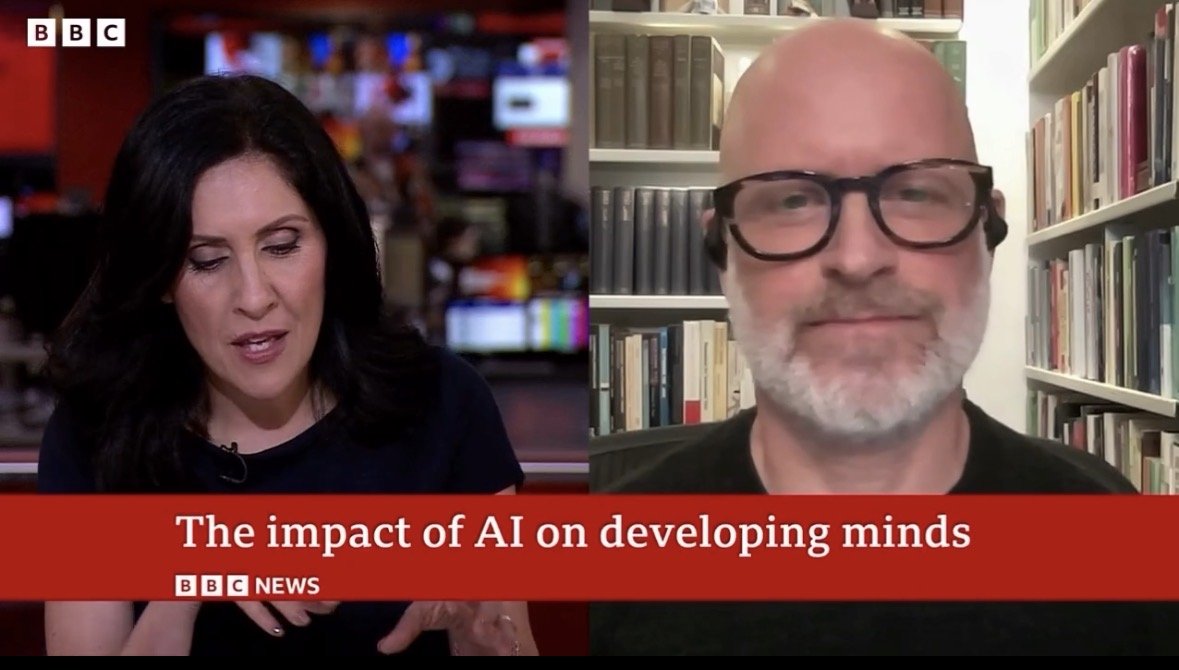
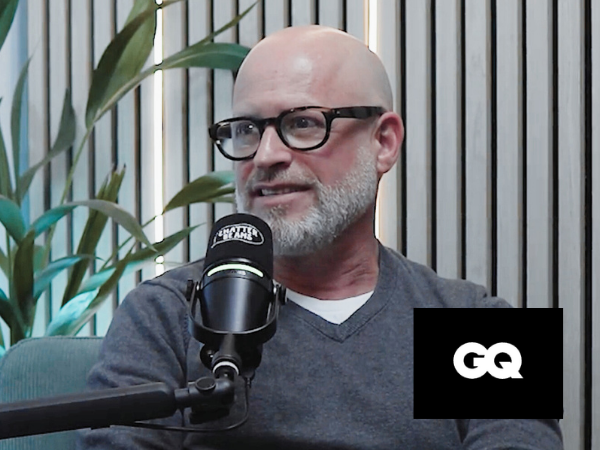
A regular voice in the media, Aaron has appeared on BBC Radio 1’s The Surgery, the BAFTA nominated BBC Three documentary Suicide and Me, and BBC Radio 4’s The Moral Maze and The Digital Human. His expertise has been featured in publications such as The Guardian, The Independent, Wired Magazine, GQ, and Newsweek. In academia, he serves as an Honorary Senior Lecturer at the Department for Psychosocial and Psychoanalytic Studies at the University of Essex, contributing to research and teaching. He is also the author of two popular self-help books, The Little Book of Calm (2018) and Keep Your Cool (2013).
keynote speeches.
-
AI isn’t just changing the world of work, it’s influencing the architecture of our inner -worlds. As people increasingly turn to machines for reassurance, advice, intimacy, and decision-making, new psychological and ethical challenges emerge. Organisations are navigating anxiety, uncertainty, over-reliance, moral unease, and a profound shift in how people relate to their work, their leaders, and themselves.
This keynote cuts through hype and moral panic to explore the psychological reality of AI: what it does to identity, thinking, emotional regulation, and human connection.
Key themes:
The Digitally Mediated Self: How AI reshapes identity, meaning-making, and the internal world
Outsourcing Our Minds: what happens when we let AI think for us and tell us how we feel
AI and Mental Health: Loneliness, connection, and the human/machine relationship
Staying Human in an Artificially Intelligent Hyper-Connected World
-
People are more “connected” than ever, and yet struggling with loneliness, polarisation, emotional avoidance, burnout, and relational shallowness. Organisations feel the knock-on effects like conflict avoidance, communication breakdowns, overstimulation, collapsing attention and the challenges of working with difference. By using depth psychology to understand digital culture, we can reveal what technology is doing to our inner lives, and how we can recover depth, presence, and human connection.
Key takeaways:
The Fragmented Self: Identity, performativity, and authenticity
The Threat to Relational Complexity and How to Reclaim It
Intimacy by App: Dating, relating, and debating
Recovering Depth, Meaning, and Embodied Connection
-
Modern leadership demands far more than communication skills and strategic vision. Leaders must navigate anxiety, change, emotional complexity, unconscious group processes, and the human consequences of hybrid working and technological acceleration.
This keynote gives leaders a psychological map of their organisation: how people defend, project, fragment, idealise, resist, avoid, and attach — and how understanding these processes is the key to trust, clarity, and high-quality decision-making.
Key themes:
Psychological intelligence vs superficial “EQ”
Navigating uncertainty, anxiety, and emotionally charged environments
The unconscious complexities of groups and teams
Defences in leadership: narcissism, imposter syndrome, perfectionism
Emotional safety and the real meaning of “wellbeing at work”
Hybrid teams, burnout, and the emotional labour of digital workplaces
Why psychologically intelligent organisations create better outcomes

videos.
Speaking Highlight
Showreel
books.


in the news.


frequently asked questions.
-
Aaron focuses on psychology, leadership, and the impact of technology on human behaviour. He explores emotional intelligence, self-awareness, identity, and how social media, AI, and hyperconnectivity shape individuals, teams, and organisational culture.
-
Aaron is typically engaged for keynote-style sessions at conferences and leadership events, where he brings psychological insight to contemporary organisational challenges. His sessions often set context around leadership, wellbeing, and technology, helping audiences better understand the human dynamics shaping modern workplaces.
-
Beyond keynote presentations, Aaron contributes to moderated discussions, panel conversations, and facilitated sessions that allow deeper exploration of leadership behaviour, psychological safety, and the emotional realities of working in digitally mediated environments.
-
Aaron’s keynotes are particularly relevant to organisations navigating digital transformation, hybrid working, cultural change, and increasing complexity around wellbeing and identity at work. He is especially valuable in contexts where leaders are seeking to balance performance with psychological health, trust, and authentic engagement.
-
He most commonly engages with senior leaders, managers, and professional audiences across corporate, public sector, and knowledge-based organisations. His work also resonates strongly with technological and creative environments where the human impact of digital systems is highly visible.
-
His approach is thoughtful, reflective, and psychologically informed, combining academic depth with practical relevance. He creates space for insight and self reflection, encouraging audiences to think more carefully about leadership, behaviour, and the emotional dimensions of work.
-
Aaron adapts his content to reflect the specific organisational context, audience seniority, and level of technological engagement. He adjusts emphasis between leadership, wellbeing, culture, or technology, ensuring his insights remain accessible while grounded in psychological understanding.
-
Aaron’s work addresses universal psychological themes that translate effectively across cultures, particularly around identity, behaviour, and human response to technology. He regularly engages with international audiences on leadership and wellbeing in global, digitally connected environments.
-
Pricing for Aaron is influenced by factors such as event location, format, and time commitment. Speaking Office ensures fee consistency across all enquiries, whether via speaker bureaus or direct clients, so that pricing remains aligned and non-competitive across channels. Accurate and up-to-date pricing can be provided once event details are shared, ensuring alignment with both the client’s requirements and Adrian’s long-term positioning.
-
Speaking Office aims to respond promptly to all enquiries regarding Aaron, typically within one business day. Response times may vary slightly depending on event complexity and time zone, but all enquiries are handled with care and attention.
-
Aaron is available for virtual and hybrid events, as well as in-person engagements, depending on availability and event requirements. Speaking Office can advise on the most appropriate format based on audience, objectives, and technical considerations.
-
Advance booking is recommended for Aaron, particularly for peak periods and international events. While shorter lead times can be accommodated, early enquiry allows for greater flexibility and planning.
-
Speaking Office exclusively represents Aaron for speaking engagements and live events work. Details regarding availability, fees and general enquiries are managed by her speaker manager via the contact information on this page.
How do I book Aaron for a speech?
Speaking Office exclusively represents Aaron Balick for speaking engagements.
To book Aaron to speak, please contact his manager Andrew at Speaking Office:
Manager : Andrew Hickman
Email: aaronbalick@speakingoffice.com
Phone: +44 (0) 7538 438 455